Brea Tree Services & Arbor Care
Menu
Stump Removal Practices to Prevent Pest Infestation in Brea
Stump Removal Brea
Tree stump removal has become an essential practice for Brea homeowners seeking to protect their properties from pest infestations. Left untreated, stumps throughout residential areas near Carbon Canyon Regional Park and established neighborhoods around Downtown Brea can become magnets for termites, carpenter ants, and other destructive insects that threaten both landscape health and home structural integrity.
The Pest Attraction Problem Created by Tree Stumps
Tree stumps create perfect breeding habitats for many pest species in Southern California. Once tree stumps begin to break down naturally, the softening wood creates an irresistible target for a variety of subterranean termite species (particularly the Formosan termite) that cause significant structural damage to homes and buildings.
In addition to attracting termites, stumps are also irresistible to carpenter ants, which create extensive colony networks inside the decaying wood. Carpenter ant colonies can dig out large interconnecting chambers while leaving the outer surface of the wood appearing undamaged, making detection difficult until significant damage has been done to the surrounding wood.
Due to the number of pest species attracted to tree stumps, virtually all of the properties in Brea, from the hillside areas surrounding Olinda Oil Museum to the residential neighborhoods adjacent to City Hall Park, experience increased pest pressure due to unremoved tree stumps.
Conditions in Brea’s Irrigation System Create Optimal Conditions for Pest Establishment and Reproduction
Brea is located in a Mediterranean climate with warm, humid conditions created by its irrigation practices. The combination of a high amount of precipitation and high temperatures accelerates wood decay in tree stumps. In addition, this climate provides optimal conditions for pest establishment and reproduction.
Common Pest Species Found in Brea Tree Stumps
The two most damaging pest species found in Brea tree stumps are the subterranean termite and the carpenter ant.
The subterranean termite represents the greatest threat to homeowners in Brea. They construct extensive networks of mud tubes connecting tree stumps to nearby structures. Termites can travel great distances underground using root systems to establish colonies that will eventually pose a threat to a home’s foundation and surrounding wooden structures.
Carpenter ants create similar yet distinctly different problems. They bore galleries through decaying tree stumps while potentially colonizing nearby healthy trees and wooden structures. Unlike termites, carpenter ants do not eat wood; however, they excavate it to create nest sites. When they exit their galleries, they leave behind sawdust-like frass, indicating their presence.
Other pest species are frequently found in Brea tree stumps, including Argentine ants, a variety of wood-boring beetles, and fungal organisms that can infect healthy trees. Due to Brea’s proximity to Chino Hills State Park, some areas with an abundance of trees and wildlife may also attract more specialized pest species native to specific locations.
Grinding or Complete Removal of Tree Stumps
Both stump grinding and complete removal provide methods for reducing the attractiveness of the stump to pest species. However, complete stump removal provides a longer-lasting pest prevention option than grinding alone.
A complete stump removal eliminates both the tree stump itself and its associated root system. This leaves no organic material that could attract insects or fungus.
Although grinding is less expensive and requires less labor than complete stump removal, complete removal provides a long-lasting method of pest prevention. For example, properties located near areas such as Memory Garden Memorial Park or those in neighborhoods where home values are dependent upon a pest-free environment, complete removal may be the best choice.
Grinding is a cost-effective alternative to complete stump removal. While grinding does not completely remove the tree stump, it does reduce the attractiveness of the stump to pest species significantly. Grinders typically grind stumps to a depth of 6-12 inches beneath the ground surface. This depth effectively eliminates the primary breeding habitat of most pest species.
Professional Methods of Removing Stumps
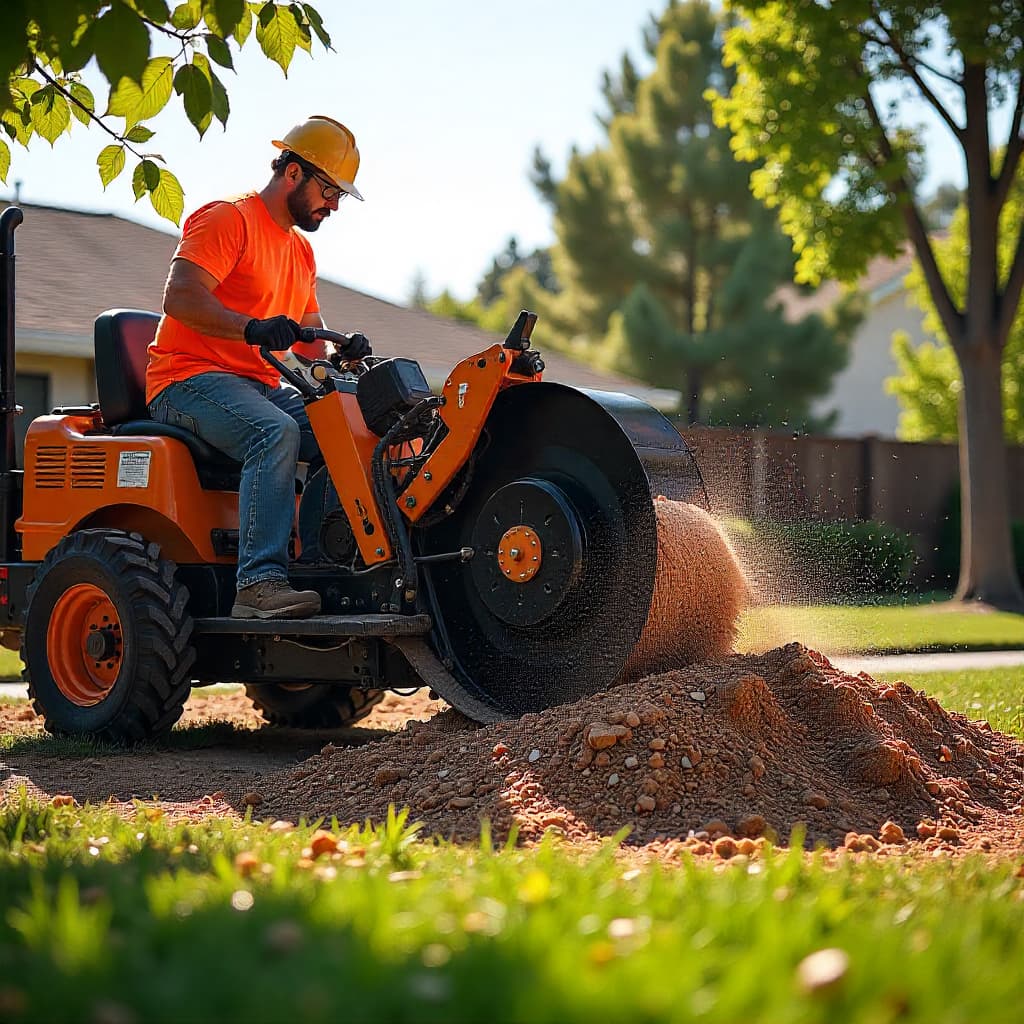
Tracked stump grinders allow for precision and speed when removing stumps. With modern stump removal equipment, it is possible to quickly and easily extract even the largest stumps in a short period of time. Typically, this process takes only hours and is much faster than the years required for the natural decay of stumps.
For added pest prevention after grinding, professionals use chemical treatments specifically designed to target and treat the remaining root systems of the stump. These chemicals help to accelerate the natural decomposition of the stump while helping to prevent any remaining organic materials from being colonized by pests.
Prior to beginning stump removal, professional assessors evaluate the soil conditions, location of nearby structures, and potential conflict with underground utilities and irrigation systems. This evaluation helps to ensure that removal of the stump will not result in damage to any of these items.
When to Remove Stumps for Pest Prevention
Removing tree stumps immediately after tree removal provides the best pest prevention option. Since fresh stumps have not begun to undergo the decay process that attracts insects, removal is generally easier, and fewer opportunities exist for pests to establish themselves in the stump.
However, if stumps have been present in the landscape for a long time, it may be necessary to treat any established infestations before removal. Treatment is essential to prevent pest dispersion to nearby trees or structures during the removal process.
Seasonal Timing for Stump Removal
Seasonal timing plays a significant role in both the removal efficiency and effectiveness of pest prevention. For example, winter is typically an ideal time to perform stump removal in Brea, since pest activity is at a low level and the cool weather makes for ideal soil conditions for easy removal of stumps.
Post-Removal Restoration of the Site
Restoration of the post-removal site provides a long-term pest prevention measure by eliminating potential areas where pests could harbor, as well as restoring the aesthetic value of the site. Professionals restore sites following the removal of stumps by filling any voids left by the stump with quality soil amendments that support the healthy growth of new plantings.
Additionally, professionals remove any debris left behind following removal, thereby eliminating any potential areas for pests to harbor in the immediate area of removal. Debris removed from the site should be disposed of or composted in a manner that precludes attracting pests to the area of removal.
Restoration of Sites Near Commercial Areas
Properties in commercial areas, such as those near Brea Mall, benefit from professional restoration of landscaping following the removal of stumps. This type of restoration maintains the property value of the property and ensures long-term pest prevention. Proper soil amendments and grading of the site following restoration prevent the accumulation of water that could lead to the development of pest-attracting conditions.
Ongoing Monitoring of Sites to Prevent Future Pest Problems
Monitoring of remaining trees and woody plants for early signs of pest movement into the treated area is critical for detecting pest problems prior to them becoming established. Ongoing monitoring programs are recommended for properties in all established Brea neighborhoods.
Maintenance of Trees to Reduce Pest Problems
Healthy trees are less susceptible to pest invasions than unhealthy or damaged trees. Maintenance of trees, such as routine pruning and health inspections, reduces the potential for dead or dying wood to serve as a source of food for pests.
Designing Landscapes That Are Unattractive to Pests
Designing landscapes that minimize conditions that attract pests is important to long-term pest prevention. Avoidance of excessive moisture near structures, selection of pest-resistant plant species, and adequate space between trees and other woody plants are examples of design principles that can contribute to successful pest prevention.
Integration with Other Property Management Practices
Stump removal should be integrated with overall property management practices, including irrigation system maintenance, soil-health programs, and Integrated Pest Management (IPM). Properties in neighborhoods such as those surrounding the Brea Improv or downtown area may need to coordinate with local municipalities regarding ordinances and/or neighbor concerns.
Assessment of Additional Risk Factors for Pest Problems
Property assessment is helpful in identifying additional risk factors for pest problems that may affect the property beyond tree stumps. Examples of such risk factors include excessive moisture, poorly maintained vegetation, and structural issues that could contribute to pest problems.
Comprehensive Stump Removal Service
At Brea Tree Services & Arbor Care, we understand that effective stump removal involves more than simply removing the visible portion of the tree. Our comprehensive approach to stump removal includes both the immediate removal of the stump and long-term pest prevention strategies that take into consideration the unique characteristics of the Brea area.
Each of our projects begins with a detailed site assessment to identify not only the stumps that require removal, but also any existing pest activity, soil conditions, and potential complications. This information allows us to develop customized removal plans that provide maximum pest prevention effectiveness while minimizing disruptions to your landscape.
Our professionally equipped equipment enables us to remove stumps of all sizes quickly and safely while adhering to the highest standards of safety. After completing removal operations, we provide complete cleanup services to ensure that no debris remains that could attract pests or detract from your property’s appearance.
Finally, we provide soil amendment and restoration services to improve the aesthetic value of your landscape and provide a long-term barrier against future pest problems. Our team can provide recommendations for suitable planting options and maintenance strategies that complement your initial stump removal investment.
Contact Us Today for Your Complimentary Consultation for Stump Removal
Call us today to schedule a complimentary consultation for stump removal. Our experienced staff will assist you in developing a plan to protect your Brea property investment while enhancing the beauty and health of your landscape for years to come.
LATEST POSTS