Brea Tree Services & Arbor Care
Menu
What Arborists Look for During a Tree Health Assessment in Brea
Tree Health Assessment Brea
A comprehensive tree health assessment involves far more than a casual glance at your landscape. Our certified arborists at Brea Tree Services & Arbor Care utilize systematic evaluation techniques developed by the International Society of Arboriculture (ISA) to thoroughly examine every aspect of your trees’ condition. Understanding what we look for during these assessments helps property owners appreciate the complexity and value of professional tree evaluation services.
Systematic Ground-to-Crown Health Evaluation Process
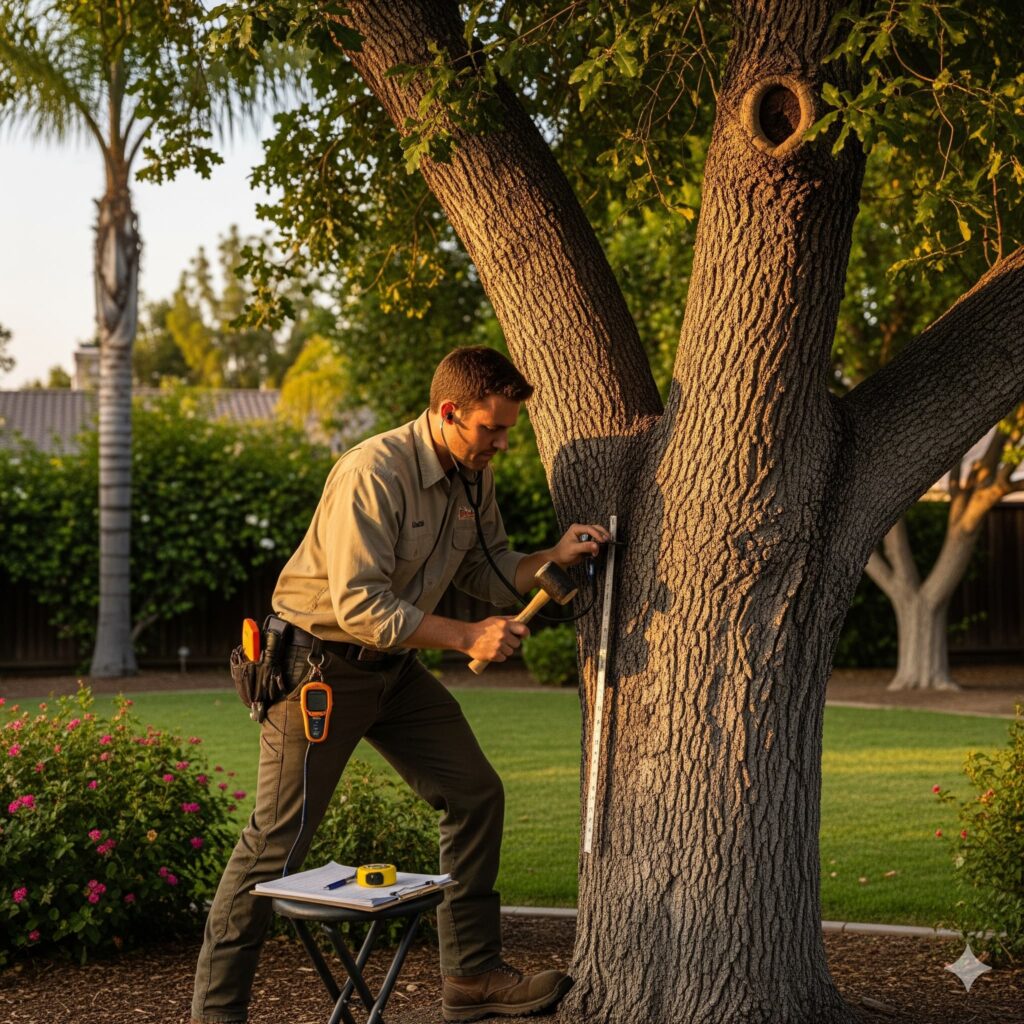
During each tree health assessment, a trained arborist follows a logical and sequential process beginning at the base of the tree (ground level), moving up through all parts of the tree’s structure. Following this systematic process enables the arborist to thoroughly evaluate the tree to ensure that no possible issues are missed and to provide accurate data for developing proper care recommendations for the tree(s).
Evaluation of Root System and Surrounding Soils
The arborist begins by evaluating the “root system” and its relationship to the surrounding soils. The arborist examines the root-collar area for any indication of girdling roots, soil compaction, and poor drainage – these are some common causes of tree decline throughout the many diverse neighborhoods of Brea.
Through soil testing, an arborist will determine the pH levels of the soil, the amount of available nutrients in the soil, and the amount of organic matter present in the soil. Each of these elements has a direct effect on the tree’s vitality. Property owners who live close to high-traffic areas, such as Brea Mall or major highways, typically have soil compaction from pedestrian and/or vehicle use, and/or construction activities; the arborist evaluates the chemical, biological, and physical properties of the soil and how these interact to support or hinder the development and growth of the tree.
Surface-root exposure, mushroom growth at the base of the tree, and any observable soil-mound or depression patterns can serve as indicators of potential root problems. In some cases, advanced methods, such as air-spading, may be suggested to allow the arborist to visualize the root architecture without damaging it.
Evaluation of Trunk Structure
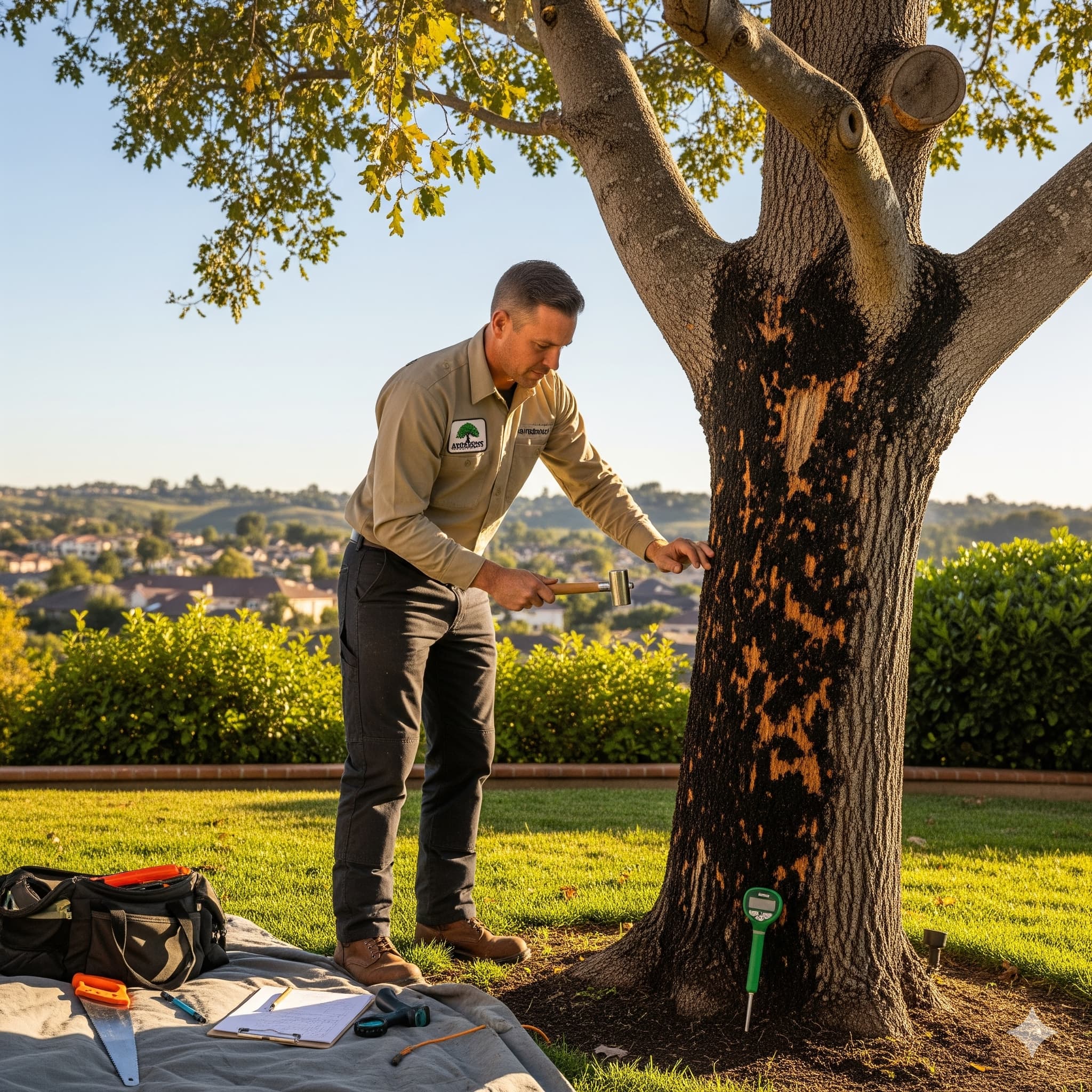
The trunk is essentially the structural framework and transport system of the tree. When conducting a tree health assessment, the arborist evaluates the bark condition of the trunk, searching for signs of cracking, canker (dead tissue), mechanical damage, or signs of pest/disease entry into the trunk.
Information regarding bark characteristics and species identification can be obtained by documenting the areas of missing bark, abnormal growths, or discolored bark that may indicate an internal problem. Mature trees located near landmarks, such as Birch Hills Golf Course, may have bark damage from lawn-maintenance equipment or construction activities.
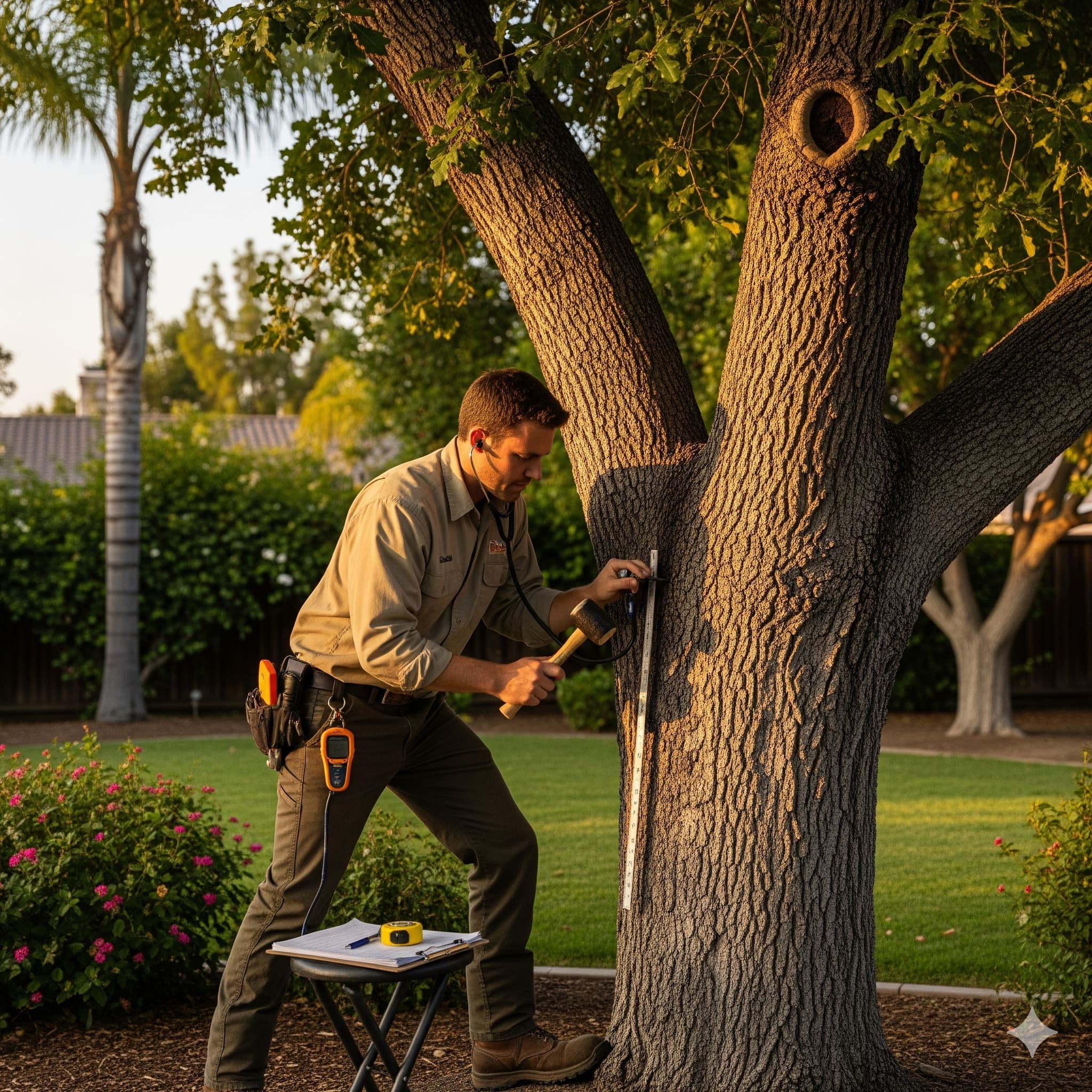
In some cases, internal trunk-condition assessment may involve the use of resistographs or sonic tomography to determine if there are any hollow areas, decay pockets, or structural weaknesses not apparent from an external inspection of the trunk. The results of these diagnostic tests will help the arborist determine the load-bearing capability and structural integrity of the trunk.
Analysis of Crown Architecture and Branches
Evaluating the crown of the tree represents perhaps the most complex aspect of assessing a tree’s health. As part of the evaluation, the arborist evaluates the branch architecture, the strength of the attachments of the branches to the trunk and larger scaffold branches, and the overall balance of the crown to identify potential failure points and evaluate structural stability.
Evaluation of Branch Attachments and Union Strength
The arborist evaluates how well the branches attach to the trunk and how well the branches attach to the larger scaffold branches. Some of the structural weaknesses that may be identified during this process include:
- Included bark: Bark that remains attached at the union.
- Co-dominant stems: Two or more stems emerge from the same point and grow at nearly equal rates.
- Tight V-shape: Where two branches meet, forming a narrow angle (less than 60 degrees).
- Bark inclusion: Bark is partially or completely included at the branch union.
Strongly attached branches exhibit prominent bark ridges and clear branch collars, whereas weakly attached branches exhibit tight V-shapes or bark inclusion at the branch unions.
Analysis of Crown Weight Distribution and Branches
As part of the evaluation of the crown, the arborist analyzes how the weight of the branches is distributed throughout the tree. The purpose of analyzing crown-weight distribution is to assist in determining if pruning or structural support systems, such as cabling, are needed to prevent branch failure. The arborist evaluates the center of gravity of the tree and how mass distribution affects mechanical stress on the trunk and root system.
Analysis of Foliage Density and Distribution
The condition of the leaves provides a quick indication of the general health and vitality of the tree. As part of the evaluation of the tree’s crown, the arborist evaluates the foliage density, color, size, and distribution patterns throughout the crown. Healthy trees exhibit full, appropriately colored leaves uniformly distributed throughout the canopy.
The arborist documents any areas of low foliage density, early defoliation, or unusual coloration that could indicate a lack of nutrients, water stress, or disease issues. Trees located near the irrigation systems of golf courses, such as Brea Creek Golf Course, may exhibit different foliar patterns than trees that rely on precipitation alone.
The timing of the season plays a significant role in evaluating foliage. Evaluations performed in spring evaluate bud-break patterns and the vigor of new growth. Summer evaluations evaluate drought-stress responses and the accumulation of damage from pests.
Assessment of Environmental Stresses
Brea’s urban environment produces several unique stresses that can negatively affect tree health. Our comprehensive evaluation includes an assessment of environmental factors that affect tree performance and longevity.
Assessment of Water Stresses and Irrigation Systems
Water availability is the main limiting factor to tree health in Southern California. The arborist evaluates irrigation systems, drainage patterns, and soil-moisture retention capabilities throughout your property. The combination of soil and water directly affects tree growth and development, and therefore, must be evaluated as part of your property.
Indicators of water stress include: wilting, leaf scorch, premature dormancy, and reduced growth rates. Mature trees on your property may experience varying levels of water stress, depending upon the design of the irrigation system and the condition of the soil.
The arborist also looks for overwatering symptoms that can be just as detrimental. Excessive moisture can lead to root rot, fungal problems, and attract pests.
Assessment of Construction and Development Impacts
Urban development can negatively affect existing trees in many of Brea’s older neighborhoods. The arborist evaluates the damage caused to existing trees by construction, including root-zone disturbance, grade changes, and soil compaction.
New construction in areas surrounding landmarks such as City Hall Park or new development throughout Brea often exhibits typical patterns of tree decline. The arborist evaluates the critical root zone of the tree and determines if adequate protection was implemented during construction.
Utility-line conflicts, either above or below ground, continue to create long-term stress for urban trees. The arborist evaluates the potential conflict and suggests solutions to manage these risks.
Assessment of Pests and Diseases
Early detection of pest infestations and disease symptoms requires a trained eye and documented observation. The arborist uses specialized knowledge to identify problems before they become serious.
Integrated Pest Management Assessment
The arborist searches for evidence of insects on the tree, including:
- Boring holes
- Sap flow
- Sawdust accumulation
- Unusual leaf-damage patterns
Different pests leave unique signs that a trained arborist can identify and document.
In addition to identifying pest damage, the arborist also evaluates beneficial insect populations. Understanding the predator-prey relationship will enable you to develop long-term management strategies that work with natural biological controls.
Methods used to monitor pest populations include:
- Pheromone traps
- Visual surveys
- Documentation of natural predators/enemies that help to maintain ecosystem balance
Disease Symptom Identification
Identifying pathogens requires knowledge of disease cycles, environmental factors, and host-susceptibility factors. The arborist conducts a systematic search for disease symptoms on the tree, including:
- Fruiting bodies of fungi
- Cankers
- Leaf spots
- Other disease symptoms
The arborist documents the rate of disease spread and evaluates environmental factors that contribute to pathogen development. Trees in densely populated areas, such as those found in and around Ted Craig Regional Park, may exhibit higher disease pressures than isolated landscape trees.
If the arborist cannot accurately identify the disease through visual symptoms, laboratory testing may be suggested. Proper pathogen identification ensures that the arborist selects the most appropriate treatment option and applies it at the correct time.
Vitality and Growth Rate Evaluation
The arborist evaluates the vitality of the tree through the evaluation of its current growth pattern and compares it to what is expected for the tree species under normal growing conditions in Brea. The arborist documents the annual growth of the tree and evaluates the overall tree vigor.
Annual Growth Measurements
The arborist measures:
- Terminal-shoot extension
- Diameter increment
- Overall size increase
These measurements help the arborist evaluate tree performance. Healthy trees exhibit consistent growth patterns that are representative of their age, species, and growing conditions.
A decline in the rate of growth can be indicative of underlying problems before obvious symptoms occur. Early detection of declining growth rates allows for intervention prior to irreversible harm occurring to the tree.
Comparative evaluation of the tree’s growth against regional growth standards allows the arborist to identify trees that are performing less than their genetic potential due to correctable factors such as nutrition or water availability.
Physiological Condition Indicators
In addition to visual assessment, the arborist evaluates physiological indicators of tree health, including wound response, compartmentalization efficiency, and stress-response patterns. Trees exhibiting strong physiological condition exhibit vigorous callus formation and rapid wound sealing.
The arborist evaluates the tree’s ability to heal from mechanical injuries, such as pruning wounds. A slow response to wounds often indicates the tree’s overall health is compromised or the environmental conditions are unfavorable.
Seasonal stress-response patterns provide information regarding the tree’s adaptability and resilience. Trees that remain in good condition throughout Brea’s hot, dry summers exhibit enhanced drought tolerance and management.
Risk Assessment and Safety Evaluation
Tree risk assessment represents a critical element of a comprehensive evaluation of tree health, especially in urban environments where tree failure can potentially cause damage to property and/or injury to individuals.
Structural Risk Factors
Utilizing Tree Risk Assessment Qualification (TRAQ) protocols, the arborist evaluates the potential for tree failure and the severity of consequences using a systematic process. The arborist evaluates the critical root zone, structural defects, and the potential for environmental loads (such as wind) to compromise the structural integrity of the tree.
Defects within the structural components of the tree are given special consideration, including:
- Decay presence
- Cracking
- Poor load distribution
The arborist documents the location, size, and rate of progress of any structural defects to estimate the potential for failure.
Factors influencing risk include:
- Wind direction and velocity
- Soil type and condition
- Presence of nearby structures
Properties having mature trees adjacent to high-traffic areas, such as Founder’s Park, may have different risk profiles than newer subdivisions.
Recommendations for Ongoing Monitoring
Following completion of the tree health assessment, the arborist makes recommendations for continued monitoring of the tree(s). The frequency of the monitoring schedule will depend on the condition of the tree, the characteristics of the tree species, and the environmental factors present on the property. High-risk trees may require annual evaluations, while healthy trees may only need to be assessed every three to five years.
The arborist establishes a baseline condition for the tree(s) and photographs significant features to track changes over time. Documentation of changes in the tree(s) will be useful for insurance purposes and will demonstrate your commitment to proactive tree management.
The monitoring protocol will include specific observational points, measurement procedures, and criteria indicating when prompt professional intervention is required.
Using Technology in Modern Assessments
Modern diagnostics offer arborists the opportunity to employ advanced diagnostic technologies in conjunction with traditional visual-assessment techniques to provide objective data to support the development of recommendations for tree management.
Digital Documentation Systems
To record comprehensive assessment records, the arborist utilizes digital photography, global positioning systems (GPS), and standardized reporting formats. Digital images document specific conditions and provide a reference for future evaluations.
Integration of geographic information systems (GIS) with digital documentation allows for comprehensive property-wide tree management planning and facilitates prioritizing care activities based on the tree’s condition and risk profile.
Digital databases track the history of treatments applied to the tree, its response to previous treatments, and long-term trends that guide the development of future management plans.
Specialized Diagnostic Tools
Diagnostic tools, such as resistographs and sonic tomography, provide the arborist with detailed information regarding the internal condition of the trunk without the need for invasive methods.
Equipment for on-site soil analysis enables the arborist to test for pH levels, nutrient availability, and physical properties of the soil that affect root development and tree health.
Tools for measuring moisture content and physical properties of the soil, such as penetration resistance, provide the arborist with quantitative data to support visual observations and recommendations for treatment.
Experience Matters in Providing Comprehensive Assessments
A comprehensive tree health assessment requires extensive education, training, and ongoing continuing education to stay proficient. At Brea Tree Services & Arbor Care, our ISA Certified Arborists bring together technical expertise and local knowledge to provide accurate assessments and practical recommendations for managing your trees.
Whether you own property in an established neighborhood near the Olinda Oil Museum or a new subdivision throughout Brea, we understand how the unique combinations of local growing conditions, climate patterns, and urban stresses affect the health and longevity of your trees.
Schedule a comprehensive tree health assessment today with our experienced professionals. Our systematic assessment process ensures that your trees will receive the expert attention they deserve and protect your property investment for years to come.
LATEST POSTS