Brea Tree Services & Arbor Care
Menu
When to Call a Pro for Tree Disease Treatment in Brea
Tree Disease Treatment Brea
Tree diseases can devastate your Brea landscape faster than you might expect. While some minor issues can be handled with basic care, knowing when professional tree disease treatment becomes essential can save your valuable trees and protect your property investment. At Brea Tree Services & Arbor Care, we help property owners throughout Brea identify the critical warning signs that require immediate professional intervention.
Recognizing Serious Symptoms of Tree Disease
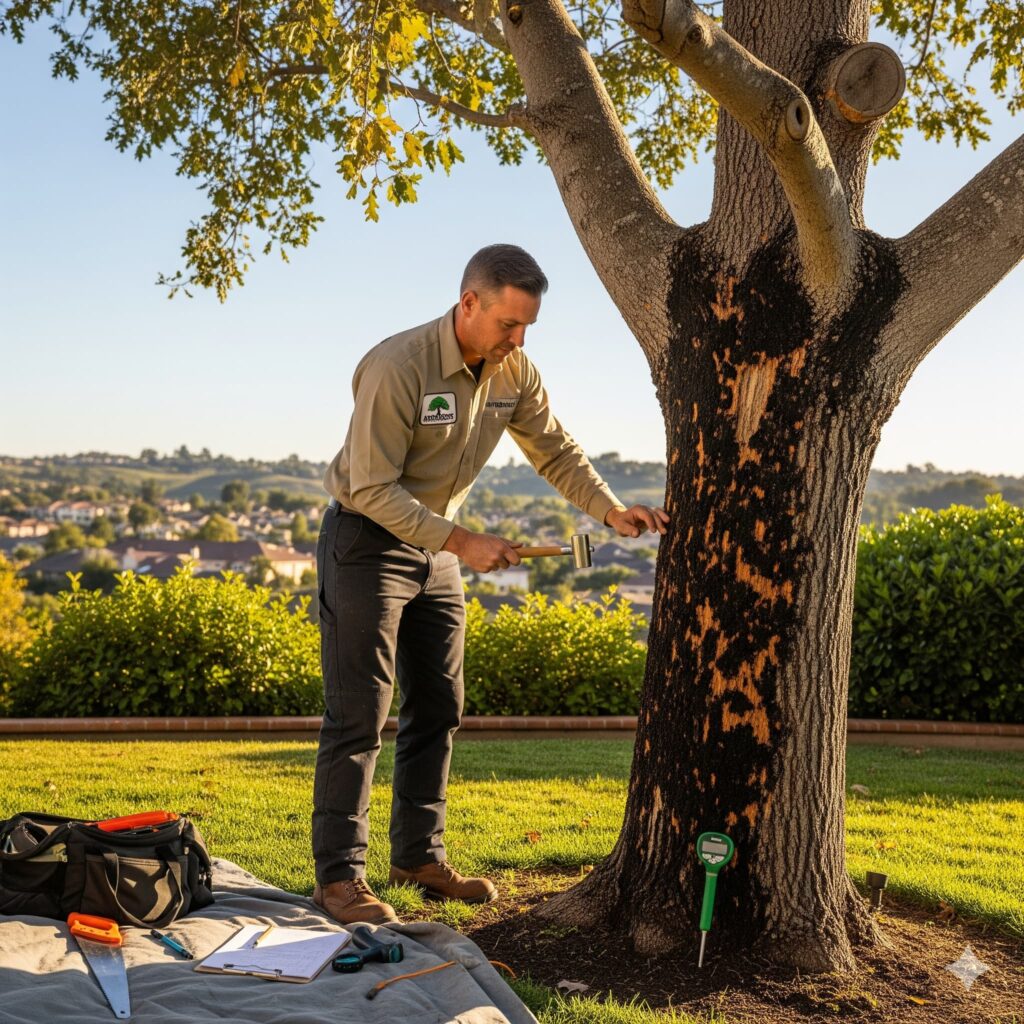
The earliest identification of a tree disease is what sets the stage for successful treatment or tree loss. It’s necessary to get professional treatment for a tree disease if you see several serious symptoms at one time or if single symptom(s) are severe and rapidly worsening.
Sudden Oak Death – California’s Worst Tree Disease
Sudden Oak Death is currently the worst tree disease affecting California’s oak population. Sudden Oak Death causes leaf spots, twig dieback, and bark cankers primarily in Brea’s Coast Live Oaks. The Sudden Oak Death disease agent is the water-mold pathogen Phytophthora ramorum, and it can infect additional plant species such as bay laurel, pepperwood, and Coast redwood.
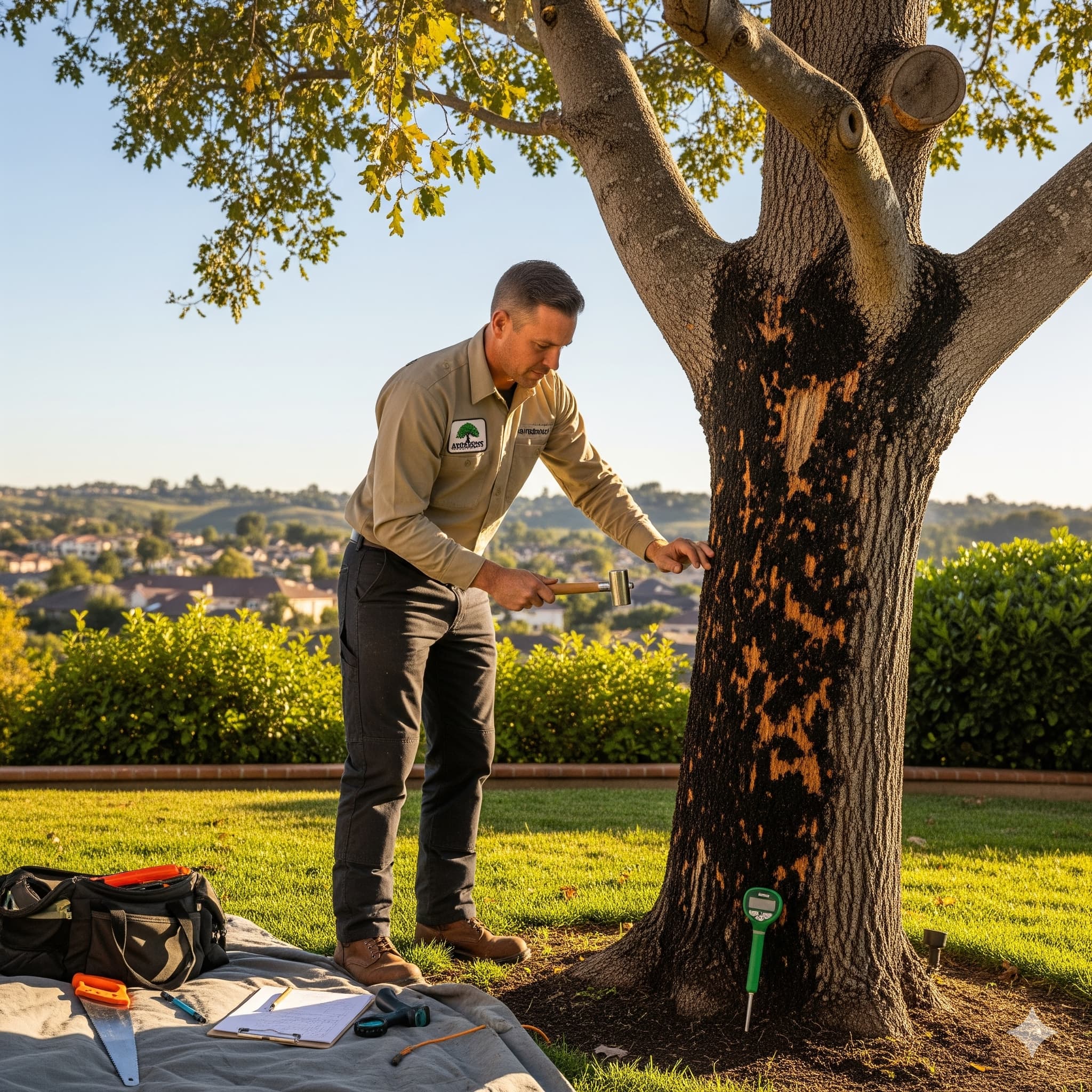
If you see cankers forming on an oak trunk with reddish-brown sap flowing out of them, it is urgent to get professional tree disease treatment. Phytophthora ramorum can spread quickly under wet conditions, and once it has infected a mature oak, it will kill it in a matter of months.
Oak Wilt – Fastest Killer of Trees
Oak wilt is a deadly fungal disease caused by Bretziella fagacearum that stops the tree’s ability to move water. Symptoms include the leaves turning brown and bronzey, starting from the margins and working their way to the stems, then the leaves start to wilt prematurely, and the tree dies, usually within four weeks of the first signs of the disease showing up.
This means that getting professional help is vital, as oak wilt can spread through root grafts between trees, as well as through insect vectors. If you do nothing, oak wilt can destroy an entire grove of oak trees in your neighborhood near parks with large tree populations, such as Carbon Canyon Regional Park, and in many other highly wooded parts of Brea.
DIY Tree Care Is Not Always the Answer
There are a number of circumstances where you should get professional tree disease treatment instead of doing it yourself. When you know what these are, you can keep your trees safe and keep your family safe at the same time, while keeping in line with California’s strict pesticide regulations.
Fungal Diseases That Are Harder Than Normal to Treat
Armillaria root rot (also referred to as honey fungus) is a fungus that infects a tree’s roots and ultimately kills the tree over a period of time. As the tree starts to die, you’ll see honey-colored mushrooms at the base of the tree, yellowing of the leaves, and reduced growth. Because this is a soil-dwelling fungus, treating it with soil-dwelling fungicides is required and is best done by a professional who understands how to treat soil. Armillaria root rot can infect multiple trees at once.
You’ll see Hypoxylon canker as sunken areas in the bark of branches and trunks of trees. This is a very damaging fungus that prefers to grow on trees that have been weakened by some form of stress, such as drought, soil compaction, or damage from construction. Professional treatment of Hypoxylon canker is required to stop the disease from spreading to your remaining healthy trees.
Complex Bacterial Diseases
Xylella fastidiosa, the bacteria that cause bacterial leaf scorch, causes the leaves of a tree to scorch from the edge inward and progressively kill the branches. Leafhoppers and spittle bugs spread this disease from tree-to-tree, so it is important to get professional treatment to contain the disease. Once Xylella fastidiosa gets into the tree’s vascular tissue, it permanently damages the tree unless you receive professional treatment.
Because of the high toxicity of these types of bacteria, the only people allowed to treat them in California are licensed professionals. While there are things you can do to help your trees, attempting to treat bacterial diseases yourself will only make things worse and could potentially violate California’s pesticide regulations.
California’s Pesticide Laws and Requirements for Professionals
California has the strictest pesticide laws in the U.S., and the California Department of Pesticide Regulation (DPR) regulates all pesticide usage in California. Only those individuals with the appropriate licensure and certifications can provide professional tree disease treatment.
Certified Arborist Requirements
All of our certified arborists hold a Qualified Applicator License (QAL) and are required to take a minimum of 20 hours of approved Continuing Education (CE) every two years. These CE requirements include a course in pesticide law and regulation. All of our certified arborists are registered with Orange County and are permitted to perform all necessary professional pesticide applications.
Systemic fungicides such as propiconazole and phosphorous acid are the type of professional-grade fungicides used to treat tree disease. They are not available to homeowners and require special equipment to apply effectively.
Safety and Environmental Compliance
Chemicals are involved in almost all tree disease treatments, and without proper handling, can be hazardous to your health. All of our professional applicators wear the required Personal Protective Equipment (PPE) and follow the required Environmental Protection Protocols (EPPs) when performing treatments. We ensure that none of the chemicals we apply will contaminate groundwater or harm beneficial insects and wildlife.
In addition, we comply with all regulatory buffer-zone and application-restriction requirements to avoid contaminating public spaces such as parks (Arovista Park, Brea Creek Golf Course) and waterways.
Timing: Key to Successful Treatment
The timing of tree disease treatment can literally decide the fate of your trees. There are different window periods for different diseases when treatment is most effective.
Seasonal Treatment Needs
Oak anthracnose requires fall or spring fungicide applications before twig infection occurs. After symptoms show up, treatment is generally ineffective. Oak leaf blister requires treatment during the time of bud swelling in early spring, before bud break, which reduces the effectiveness of treatment.
Treatment for Sudden Oak Death must begin immediately after diagnosis since the pathogen rapidly spreads during the rainy season in California. Even delaying treatment by weeks can spell the difference between saving and losing your tree.
Emergency Situations
Some symptoms require immediate professional evaluation, and sometimes, within 24 to 48 hours of noticing the symptoms. Examples of such symptoms include: rapid wilting of large portions of the tree, excessive bark bleeding or canker formation, rapid defoliation during the growing season, and mushroom growth at the base of the tree. Properties located near parks with irrigation systems and densely populated trees (Birch Hills Golf Course, City Hall Park) are likely to experience accelerated disease transmission due to the combination of the above factors. Prompt professional action will help prevent an individual infection from developing into a neighborhood-wide problem.
Diagnostic Capabilities of Professionals
Determining the correct tree disease requires laboratory testing, specialized equipment, and extensive education/training that homeowners typically do not possess. Certified arborists can distinguish between similar-looking conditions and identify specific disease agents.
Advanced Laboratory Testing
We use a variety of methods to test for disease agents, including soil testing, tissue sampling, and microscope examination. Certain conditions, such as Armillaria root rot, may require excavating the root system of the tree, which homeowners cannot do themselves.
Correctly identifying the disease agent prevents incorrect treatment that can cause unnecessary damage to the tree. For example, oak decline can be caused by numerous simultaneous factors (pests, diseases, environmental stresses) that require different treatment strategies.
Comprehensive Treatment Programs
Professional tree disease treatment involves integrating various techniques such as chemical treatments, cultural practices, and prevention. Based on the specific pathogen, tree species, environmental cconditions and local disease pressure, we create customized treatment programs. These treatment programs include: soil amendments, adjusting irrigation, establishing a pruning schedule, and monitoring procedures that address the underlying stresses that made the tree susceptible to disease.
Cost Comparisons: Professional vs. DIY
While getting professional tree disease treatment can be expensive, the costs associated with losing trees can be substantially higher. Mature trees located in prominent locations (Olinda Oil Museum, Founder’s Park) are often worth tens of thousands of dollars, and replacing them is equally costly.
Hidden Costs of Delayed Treatment
Trees with disease can pose liability risks for branch failure or total tree collapse. Property damage, lawsuit settlements for injuries caused by falling branches, emergency removal costs, and insurance claims for damaged trees due to disease are all potential costs that can be greater than the cost of professional treatment. Additionally, tree removal and replacement costs for mature trees are increasing, and retaining the trees you already have can save you money and effort in restoring your landscaping.
Monitoring Your Trees Regularly
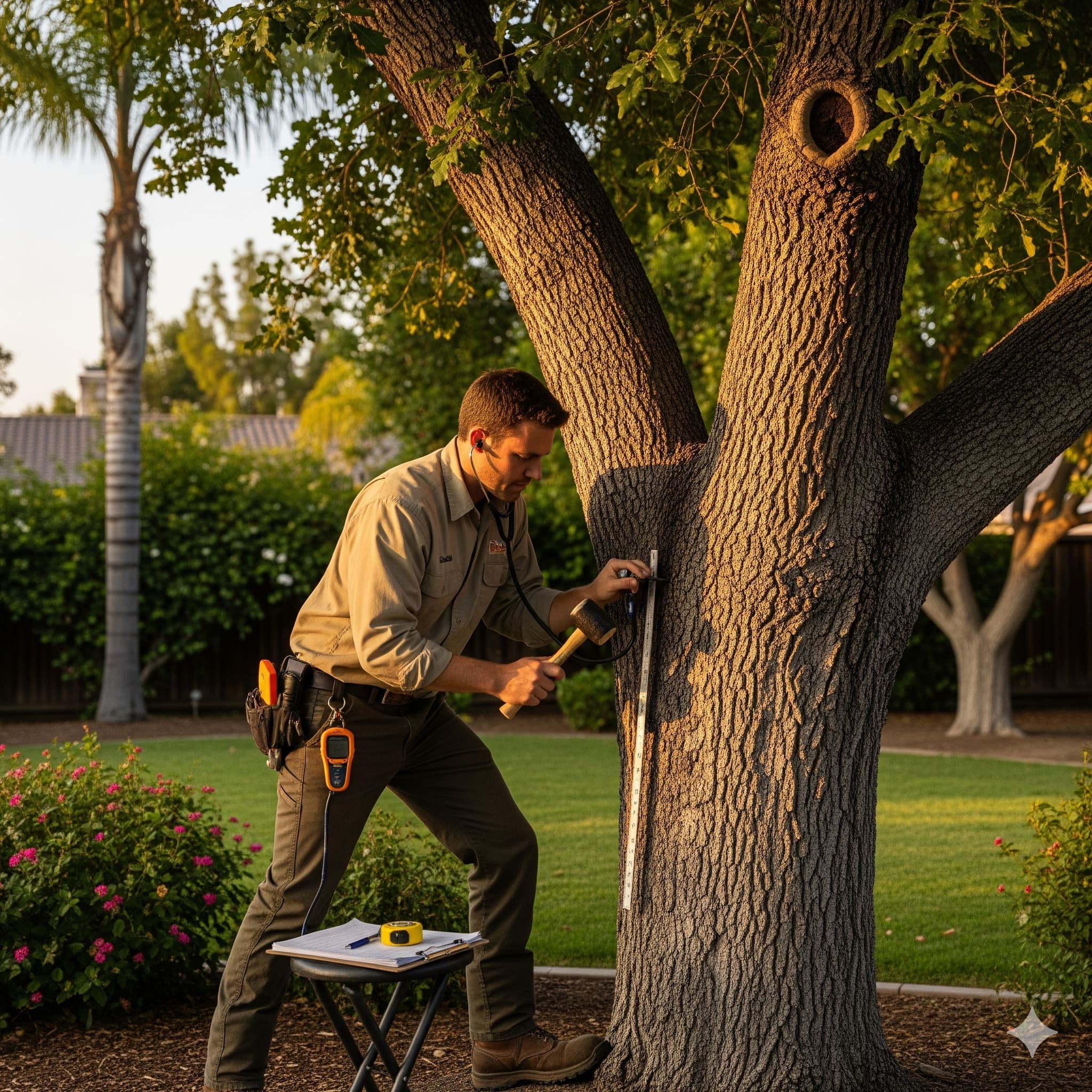
Getting regular tree health assessments performed by certified arborists allows you to detect potential problems before they reach crisis levels. Our certified arborists can identify early stages of disease that non-trained people would not.
Preventative treatments such as soil conditioning, proper pruning, and reducing stress will keep your trees healthy and resistant to disease. Establishing a regular tree health monitoring program is much less expensive than waiting until the disease is widespread and performing emergency treatments.
Trust Our Team
At Brea Tree Services & Arbor Care, we offer experienced and skilled tree care services and arborist services that are unmatched in the area. Our certified arborists have expertise in treating tree diseases that can be found in the unique climate of Brea. From the hills near Ted Craig Regional Park to the urbanized areas surrounding the Brea Mall, we have the knowledge and experience needed to preserve the beauty and health of your trees.
Do not gamble with the loss of your valuable trees to preventable disease. Call us today if you see symptoms of tree disease in your trees. By acting promptly and correctly treating your trees, we can help you save your trees and your property for future generations.
LATEST POSTS