Brea Tree Services & Arbor Care

Menu
Emergency Tree Service vs. Routine: Costs for Brea Homeowners
Emergency Tree Service Brea
Emergency tree service and regular maintenance are two different types of tree care that Brea residents may use to plan how they will spend money on their trees. Routine services in residential neighborhoods surrounding Downtown Brea or other older established neighborhoods surrounding City Hall Park have costs that generally fall into a range of $200 to $760 for trimming. Emergency tree removals, however, can be as much as 2-3 times higher than the cost of routine services, with costs ranging from $1000 to $5000, based on the severity and level of urgency of the emergency.
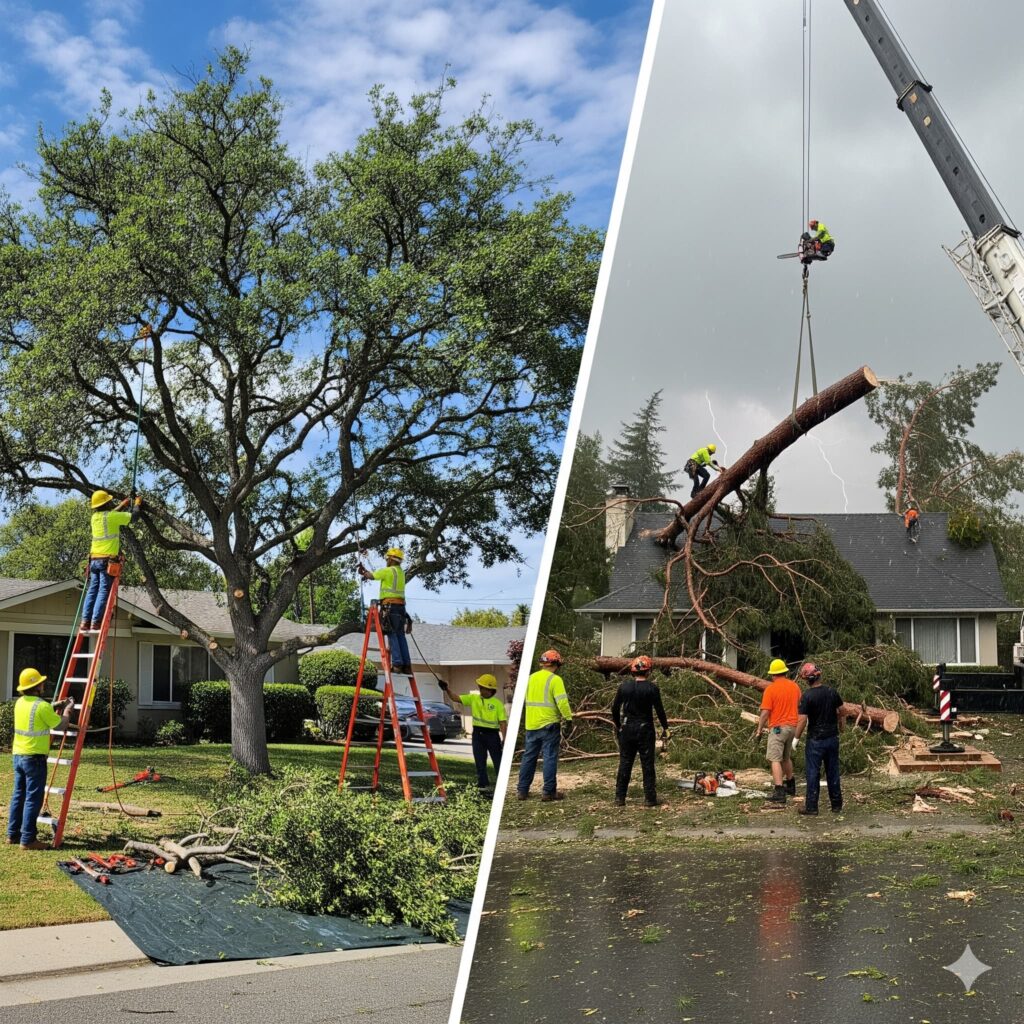
Routine Tree Service Prices in Brea
Brea has many predictable price structures to help property owners budget for routine tree service. Typical professional tree trim costs vary greatly depending on the size of the tree, with the typical tree trimmings being between $430-$640 for average-sized trees. Smaller trees are priced around $75, and larger mature trees have been known to be trimmed at up to $1,800 for some of the more complicated jobs.
The tree-pruning services offered throughout the residential areas of Brea (from houses near Arovista Park to houses near the Brea Mall) cost anywhere from $50-$125 per hour, depending on how difficult the job is and what type of equipment will be needed. Jobs that need bucket trucks or specialized climbing equipment are going to cost more than ground-level jobs.
Routine tree removals in Brea cost anywhere from $300-$2,000, depending on the size of the tree, the species of the tree, and the location of the tree. Properties in the older established neighborhoods (like the area near the Brea Museum & Heritage Center) tend to have more mature trees that are going to require more planning and equipment and therefore will cost more.
Premium Pricing for Emergency Tree Services
Emergency tree services cost significantly more than routine services because of the urgency of the job, the increased risk to people and property, and the interruption to regular operations. Emergency pricing can run anywhere from $150-$250 per hour compared to standard pricing of $50-$125 per hour, which represents a 100-200 percent premium over routine pricing.
Storm-related damage in Brea, especially in areas near Carbon Canyon Regional Park or on hillside properties near the Olinda Oil Museum, can lead to emergency tree-removal costs of $1,000-$5,000 or more, depending on how complicated the situation is and how quickly the tree(s) need to be removed for safety reasons.
Additionally, after-hour emergency calls, weekend services, and holidays will add additional premium charges above and beyond emergency pricing. Property owners who have trees that are threatening structures or creating barriers to access will see their costs go up rapidly based on the sense of urgency and how quickly resources can be allocated to resolve the emergency.
Why Do Emergency Services Charge More?
There are several factors why emergency tree services will cost more to homeowners throughout Brea. The first reason is that emergency services will often interrupt the homeowner’s routine tree-service company and cause that company to lose money on the interrupted service. Second, emergency services require the homeowner’s tree-service company to deploy its crew immediately, which may require the company to pull staff away from other non-emergency projects. Third, emergency services are often performed at times when the homeowner’s tree-service company would normally be closed (i.e., evenings, weekends, holidays), and that requires extra overtime pay to the employees performing the emergency service. Fourth, emergency services create greater safety risks to employees and to the general public than routine services, which increases the use of specialized equipment and techniques, and the hiring of more experienced employees. Finally, if the homeowner’s tree is located in proximity to power lines, then the homeowner’s tree-service company will need to hire a certified line-clearance worker and will need to coordinate with the local electric company, which increases costs even further.
Factors That Contribute to Higher Emergency Service Costs
Many factors contribute to higher emergency tree-service costs that property owners throughout Brea should be aware of. One of the most obvious factors is that emergency services require the homeowner’s tree-service company to respond immediately to an urgent situation, which means that the company cannot afford to take the time to bill the customer correctly for the work performed, and that is one of the largest factors contributing to the higher costs of emergency services. Another factor is that emergencies are more dangerous to the employees of the homeowner’s tree-service company and to the general public than routine services, and that increases the need for specialized equipment and techniques, and for more experienced employees, which increases costs to the homeowner. In addition, many emergencies occur in areas that are difficult to reach, and that require the use of specialized equipment and techniques, awhichincreases costs. For example, emergencies in areas that are difficult to reach by vehicle may require the homeowner’s tree-service company to use aerial lifts or cranes to remove the tree, and these types of equipment are expensive to rent and to operate. Finally, many emergencies require the homeowner’s tree-service company to coordinate with utility companies, and that can be a costly process, which can also delay the completion of the emergency service.
Do Homeowner’s Insurance Policies Cover Emergency Tree Services?
In many cases, a homeowner’s insurance policy will cover emergency tree removal when the tree falls as a direct result of a covered peril (e.g., windstorms). However, there are many exceptions to this rule. First, not all insurance policies are created equal, and some policies will only cover emergency tree removal if the tree damages a covered structure (e.g., house, garage, shed). Some policies will only cover emergency tree removal if the homeowner documents the damage to the tree properly, and some policies may have exclusions for certain types of tree removal (e.g., removal of dead trees). Second, even if a homeowner’s insurance policy does cover emergency tree removal, there may be coverage limitations and deductibles that apply to the loss, and these can result in the homeowner paying out-of-pocket for a portion of the emergency tree-removal costs. Finally, emergency tree-removal costs are “reasonable,” so if the cost of emergency tree removal is deemed unreasonable, the homeowner may be responsible for paying the excess amount.
How Much Do Insurance Companies Typically Pay for Emergency Tree Removal?
Typically, a homeowner’s insurance policy will cover emergency tree-removal costs, but the amount paid by the insurance company will depend on the specifics of the loss and the terms of the policy. Generally speaking, insurance companies will cover emergency tree-removal costs, but the payment will likely be limited to a specific dollar amount (e.g., $1,000) and/or a percentage of the total cost of the emergency tree removal (e.g., 80%). Additionally, the homeowner may have a deductible that must be met prior to receiving payment for emergency tree-removal costs.
Will Insurance Companies Pay the Entire Amount of an Emergency Tree Removal Bill?
In most cases, no. As mentioned previously, insurance companies will typically limit their payment for emergency tree-removal costs to a specific dollar amount (e.g., $1,000) and/or a percentage of the total cost of the emergency tree removal (e.g., 80%). Therefore, even if an insurance company agrees to cover emergency tree-removal costs, the homeowner may still be responsible for paying some of the costs out-of-pocket. This can be frustrating for homeowners who believe that their insurance company should cover the entire cost of the emergency tree removal.
What Factors Cause Seasonal Changes in Tree Service Pricing?
Routine tree services in Brea often experience lower pricing during the off-season (typically winter) since demand is lower and contractors offer discounts to keep their crews working year-round. When the off-season ends, routine pricing returns to normal levels, and emergency pricing continues to be significantly higher than routine pricing due to the urgency of the situation and the additional costs associated with providing emergency services.
During stormy weather conditions in Southern California, there are more properties that require emergency tree services at the same time, and the demand for emergency services causes the prices for emergency tree services to increase. Since many properties throughout Brea’s urban areas compete for emergency services during the peak-demand season, property owners need to plan and budget accordingly.
By scheduling routine maintenance during the off-season when pricing is discounted, property owners can reduce the likelihood of needing emergency services, thereby reducing the overall cost of tree care and ensuring that their trees remain healthy and beautiful.
Costs Associated With Equipment and Specialized Services
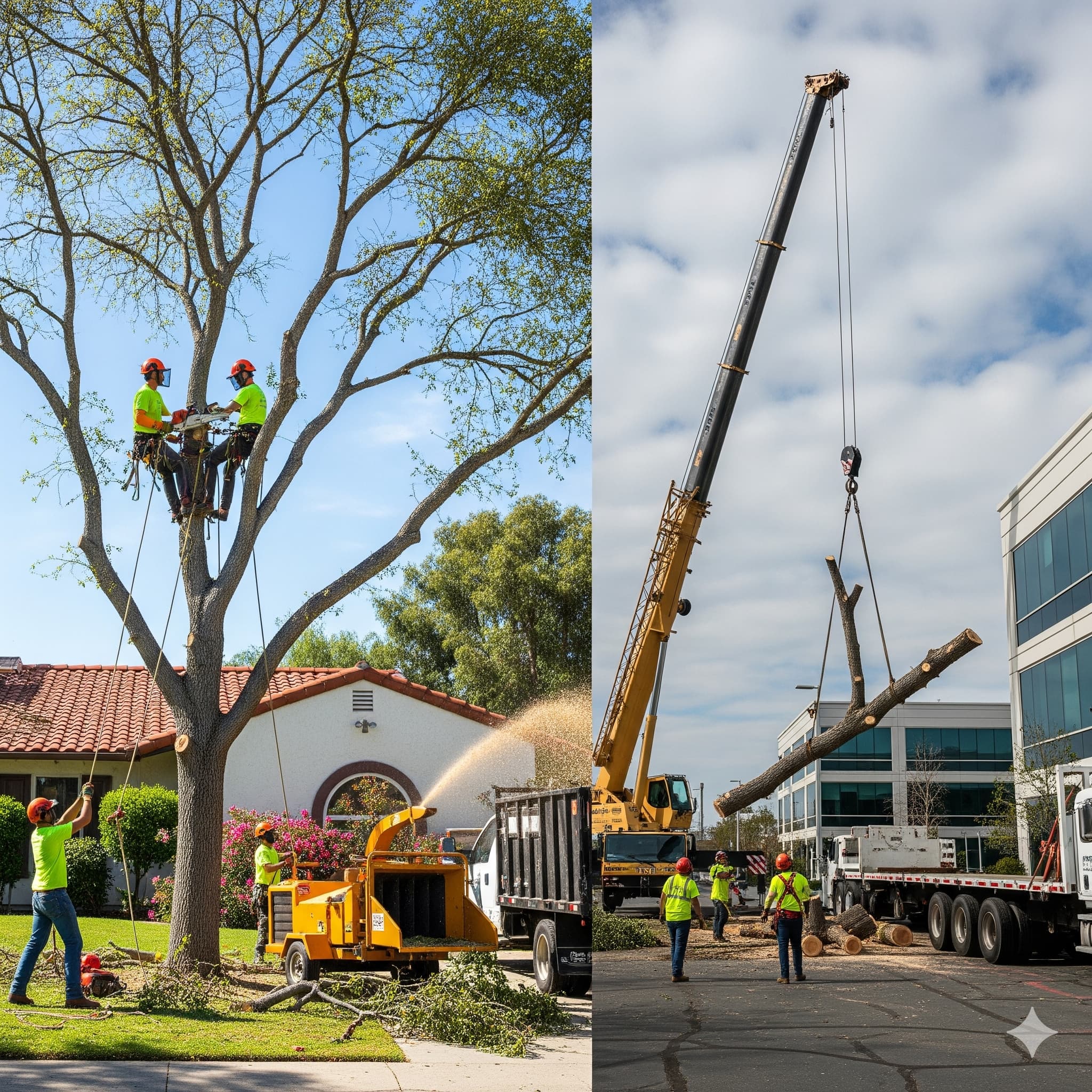
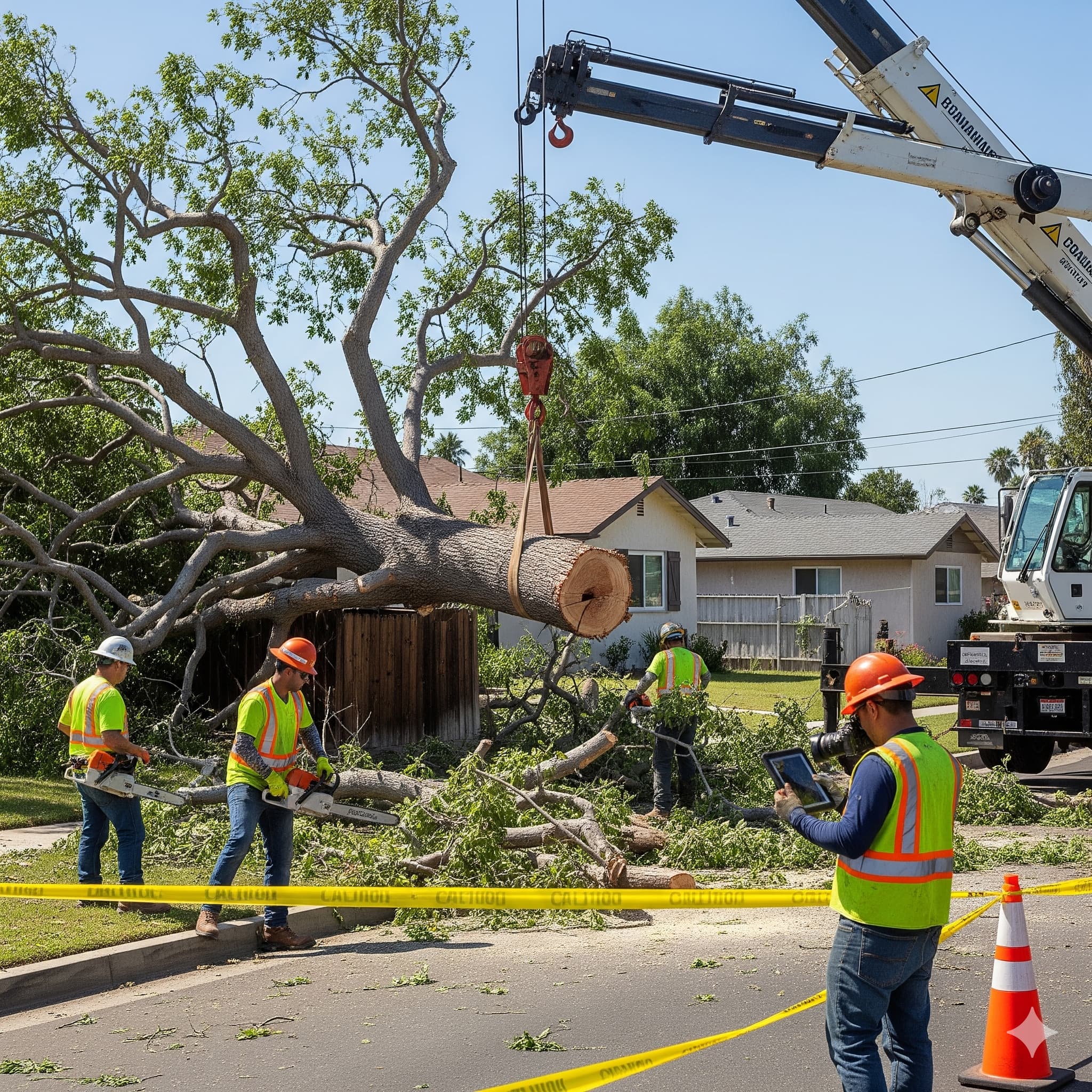
Emergency services often require the use of specialized equipment that increases the cost of the service compared to routine maintenance. For example, crane-assisted removal of trees is commonly used in emergency services, and the cost of renting a crane can be as high as $2,500 per day, depending on the location and availability of the crane. Additionally, crane operators and crane insurance can increase the cost of the service.
Traffic-control measures are often required for emergency services that affect public roads or create a hazard for pedestrian and vehicular traffic. Flagging crews can cost between $175-$225 per hour to set up and maintain traffic-control measures, depending on the number of flaggers needed and the duration of the service.
Constrained-space emergency removal of trees is common in areas like downtown Brea, where trees grow in tight spaces between buildings, and can require specialized rigging equipment and techniques that increase the cost of the service. Due to the complexity and risk of constrained-space removals, these services are often priced at a premium.
Costs Associated With Debris Removal and Cleanup
Emergency services generate a lot more debris and require immediate cleanup compared to routine maintenance. Emergency debris-removal costs can range from $75-$250 per trip, depending on the weight of the debris and the distance to the disposal site. Storm situations can result in multiple trips to the disposal site, increasing the cost of debris removal.
Cleanup of debris resulting from emergency services can also cost more than routine cleanup. Routine tree services often include basic cleanup in their standard pricing, whereas emergency services may require extensive cleanup of debris generated by the storm, including the use of specialized equipment and labor. Property owners throughout Brea’s residential areas may also incur additional costs to repair landscaping damage caused by equipment or debris from emergency services, ranging from $50-$100 per hour.
Due to high volumes of debris generated by storm situations, local disposal facilities may impose higher fees to dispose of tree debris during emergencies. Disposal fees can range from $30-$100 per ton, depending on the facility and the volume of debris disposed.
Benefits of Regular Tree Maintenance
Annual tree trimming costs can range from $430-$640 and can save property owners a lot of money compared to emergency service needs. Emergency tree-removal costs can range from $2,000-$5,000 or more, depending on the complexity of the job and the type of equipment and labor required. Regular maintenance is a great way for property owners to invest in their trees and save money in the long-run.
Many property owners in the Brea area have established maintenance schedules with professional services to take advantage of cost savings. Many professionals offer multi-year contracts, bulk pricing for multiple trees, and priority scheduling to manage ongoing costs and reduce the likelihood of needing emergency services.
Determining Whether an Emergency Situation Requires Emergency or Standard Pricing
Not every urgent tree situation requires an emergency response. Homeowners can often schedule “emergency” service within 24-48 hours at standard rates instead of an immediate emergency response and save a lot of money. Homeowners should consult with their professional tree-service company to determine whether the situation requires emergency response or can wait for standard scheduling.
Expert guidance from professional tree-service companies can help property owners weigh safety concerns against cost concerns and make smart decisions. If a tree is threatening immediate safety, blocking access for emergency responders, or poses an imminent threat of property damage, then emergency pricing is warranted and is justified due to safety risks and operational complexities.
Transparent Pricing at Brea Tree Services & Arbor Care
At Brea Tree Services & Arbor Care, we believe that our customers deserve to know exactly how much they are paying for both routine and emergency tree services. That’s why we offer clear, honest pricing for both routine and emergency tree services throughout Brea. Our routine maintenance programs provide predictable costs for property owners to budget for and maintain their valuable tree assets.
If an emergency occurs, we clearly explain the pricing for emergency services and how it reflects the additional costs incurred by emergency services, including the need for specialized equipment and safety precautions. We also work closely with our customers and their insurance companies to ensure that we are providing fair and reasonable pricing for emergency services.
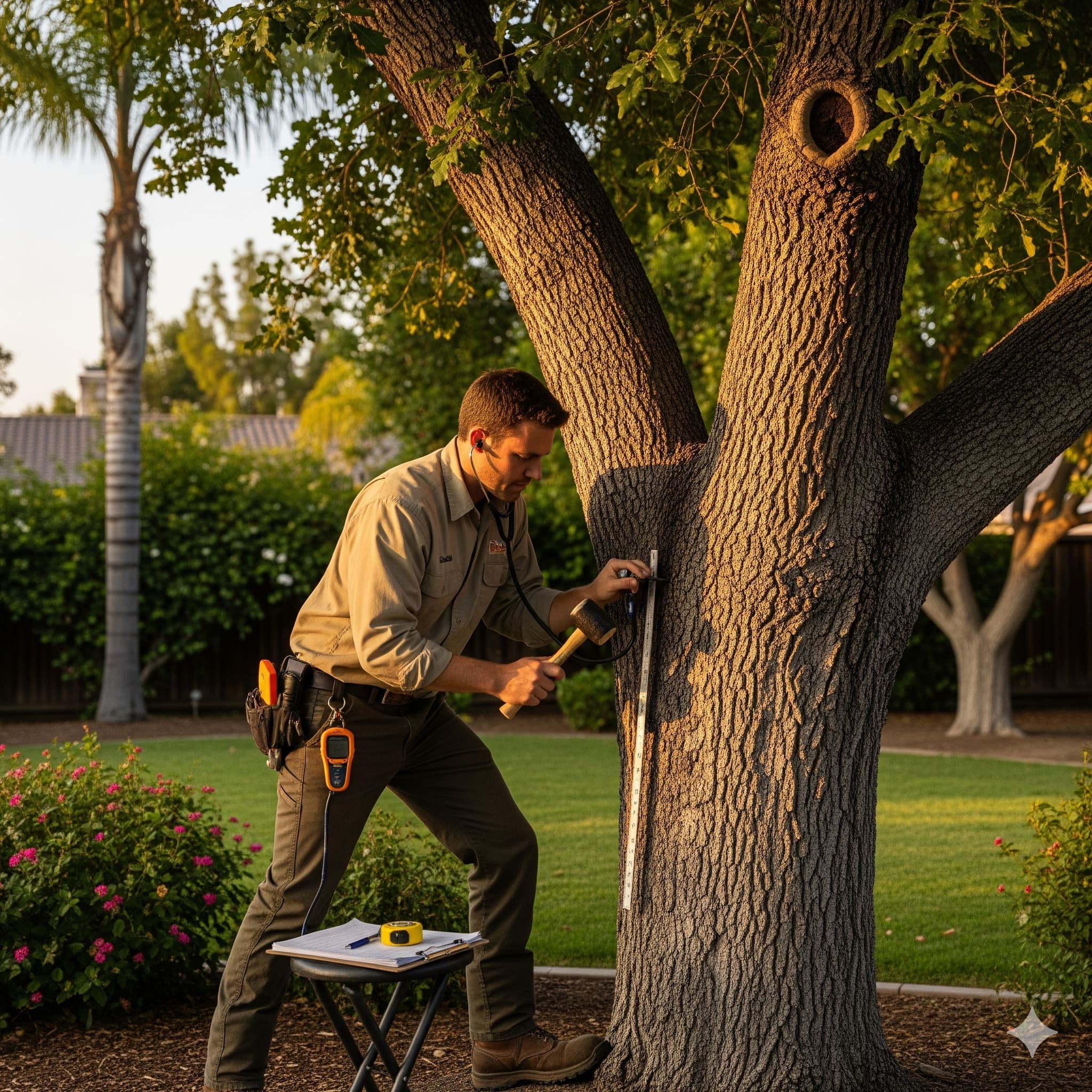
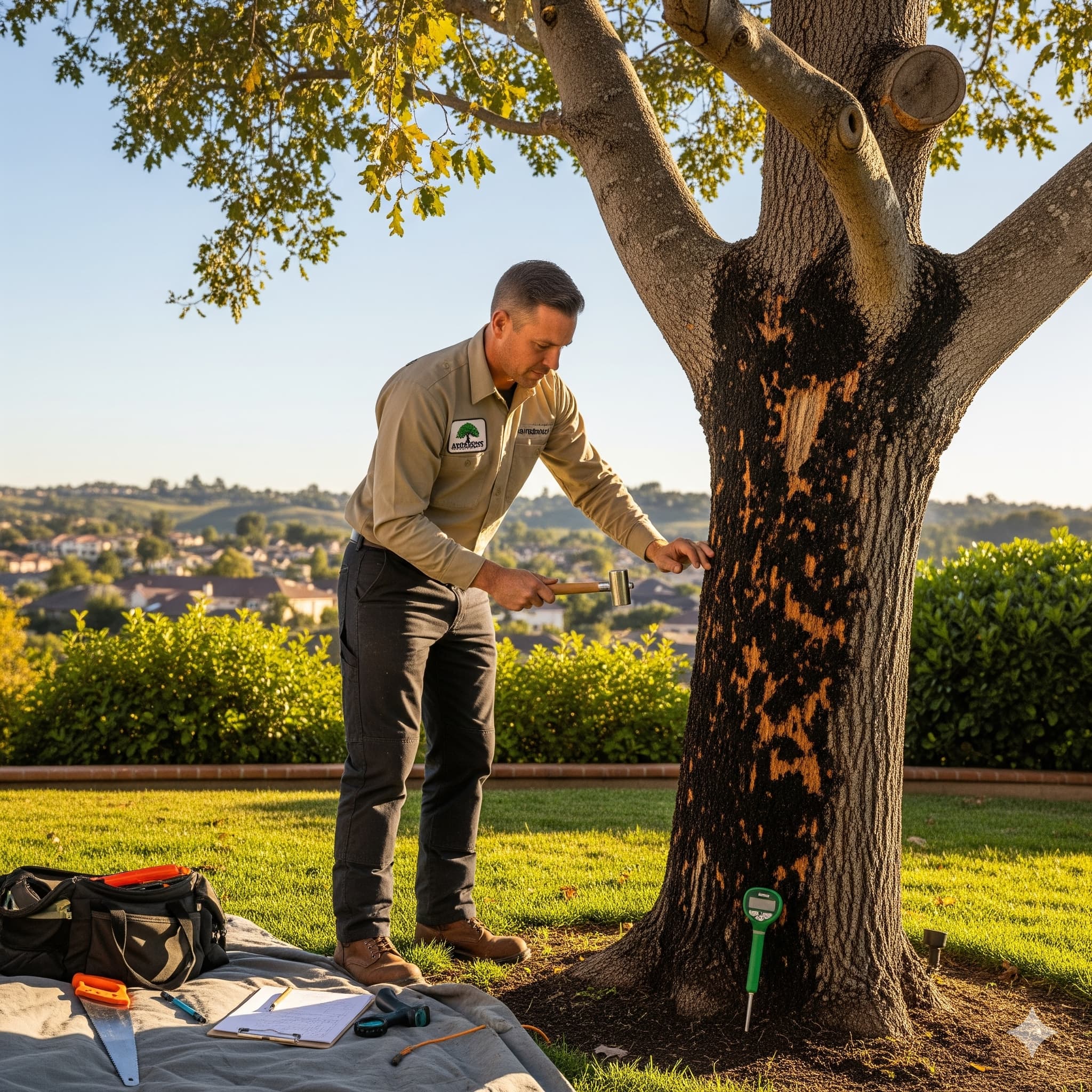
Our preventive-maintenance programs help protect homeowners from emergency tree-service situations. By regularly inspecting and caring for their trees, we can help identify potential problems before they become major issues that require emergency intervention. Our preventative-maintenance programs provide excellent value to property owners by preventing expensive emergency services and maintaining healthy and beautiful trees.
Estimates for Both Routine and Emergency Services
At Brea Tree Services & Arbor Care, we provide our customers with detailed estimates for both routine and emergency services. We explain the costs of each service, including any additional costs that may be incurred. Our goal is to educate and inform our customers so they can make informed decisions about their tree-care needs. We want to develop long-term relationships with our customers based on fair pricing, quality work, and open and honest communication about our services.
Contact Us Today
To learn more about routine maintenance programs that can help you avoid emergency tree-service costs and keep your Brea property safe and beautiful, contact us today. We look forward to discussing ways to proactively care for your trees to help you achieve your goals.
LATEST POSTS